My Cookies Packed My Suitcase: A Week of Vacationing as My Search History's Puppet
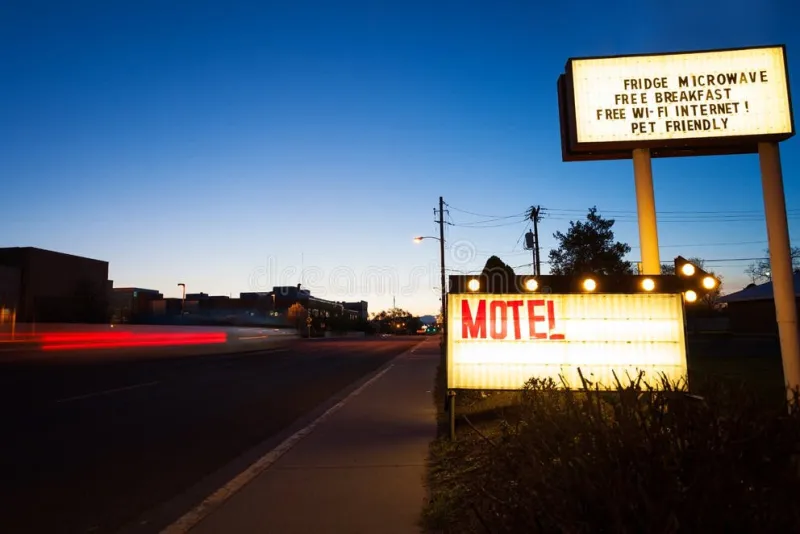
Photo: motel exterior roadside America highway sign evening, via thumbs.dreamstime.com
Here's the deal I made with myself: for one week, I would let a travel planning algorithm — fed nothing but my complete, unfiltered search history — decide my vacation. No vetoes. No edits. Wherever it booked, I would go, and I would pay for it with my own money like a functioning adult.
I want to be clear about what I was imagining. In my head, the algorithm would see the trip reports I'd read about the Amalfi Coast. The hiking gear I'd price-checked. The one time I looked up "how to say thank you in Japanese" at 2 a.m. It would see a person. A curious, worldly person who is, at minimum, airport-adjacent.
The algorithm saw something else entirely.
What the Machine Actually Read
According to the itinerary it generated, I am a person whose entire personality can be summarized by my last ten clicks. And my last ten clicks were: a comparison chart for portable propane fire pits, a Reddit thread about whether gas station sushi in Missouri is "actually fine," a video titled "Top 5 Storage Unit Auction Fails," and a deeply concerning number of searches for "does cheese expire or just get stronger."
The cheese searches alone constituted 34% of my data profile. I did not know this about myself. The algorithm did.
So when the confirmation email arrived — non-refundable, naturally — for three nights at a Motel 6 in a town I will not name but which rhymes with "a place where bass boats are the cultural apex," I understood. The machine wasn't broken. The machine was honest.
The Cabela's Situation
The motel sat approximately 40 feet from a Cabela's. Not near. Adjacent. I could see the giant taxidermy mountain through my motel window while brushing my teeth, which is a sentence I did not expect to write and certainly didn't expect to feel emotional about.
And here's the twist I did not see coming: the algorithm had, in its cold cookie-crumb wisdom, chosen correctly. Because my search history also included "best budget road trip stops," "is Cabela's open on Sundays," and — this is the damning one — "how long can you legitimately stay in a store that is free to enter."
I spent four hours in that Cabela's. Four. I watched the aquarium. I bought a fleece I don't need. I ate jerky samples with the quiet reverence of a man at a wine tasting. The algorithm didn't send me to a store; it sent me to a mirror.
Recommendation Engines See the Real You (Unfortunately)
Here's the uncomfortable pop culture finance angle nobody puts on the brochure: these systems don't optimize for who you want to be. They optimize for who you demonstrably are, measured in clicks, which is a much crueler currency.
The version of me who reads about the Amalfi Coast is a persona. The version of me who has searched "cheapest gas near me" 212 times in one year is a fact. Travel marketers spend billions selling us the persona. The algorithm just cashes the check.
There's a real dollar-and-cents lesson buried in my humiliation, too. The whole trip — motel, gas, the fleece, an alarming quantity of jerky — came to $312. The Amalfi Coast honeymoon itinerary I'd been curating in a folder marked "Someday" sat at $4,800. My cookies didn't just know me better than I know myself. They knew my actual budget better than my aspirations did.
Final Verdict, Grudgingly
Would I recommend letting your browsing history plan your vacation? Only if you're prepared to meet yourself at highway speed. There is no filter between the person who bookmarks articles about Tuscan villas and the person who has strong opinions about gas station sushi. The algorithm merges them into one sad, sunburned guy eating jerky under a taxidermy mountain.
And honestly? Three hundred and twelve dollars well spent. Someday is expensive. Tuesday at the Cabela's is free.
My cookies have already booked my next trip. I'm afraid to look, but the confirmation email has a fishing theme, and I've never fished in my life. But apparently, I'm about to.